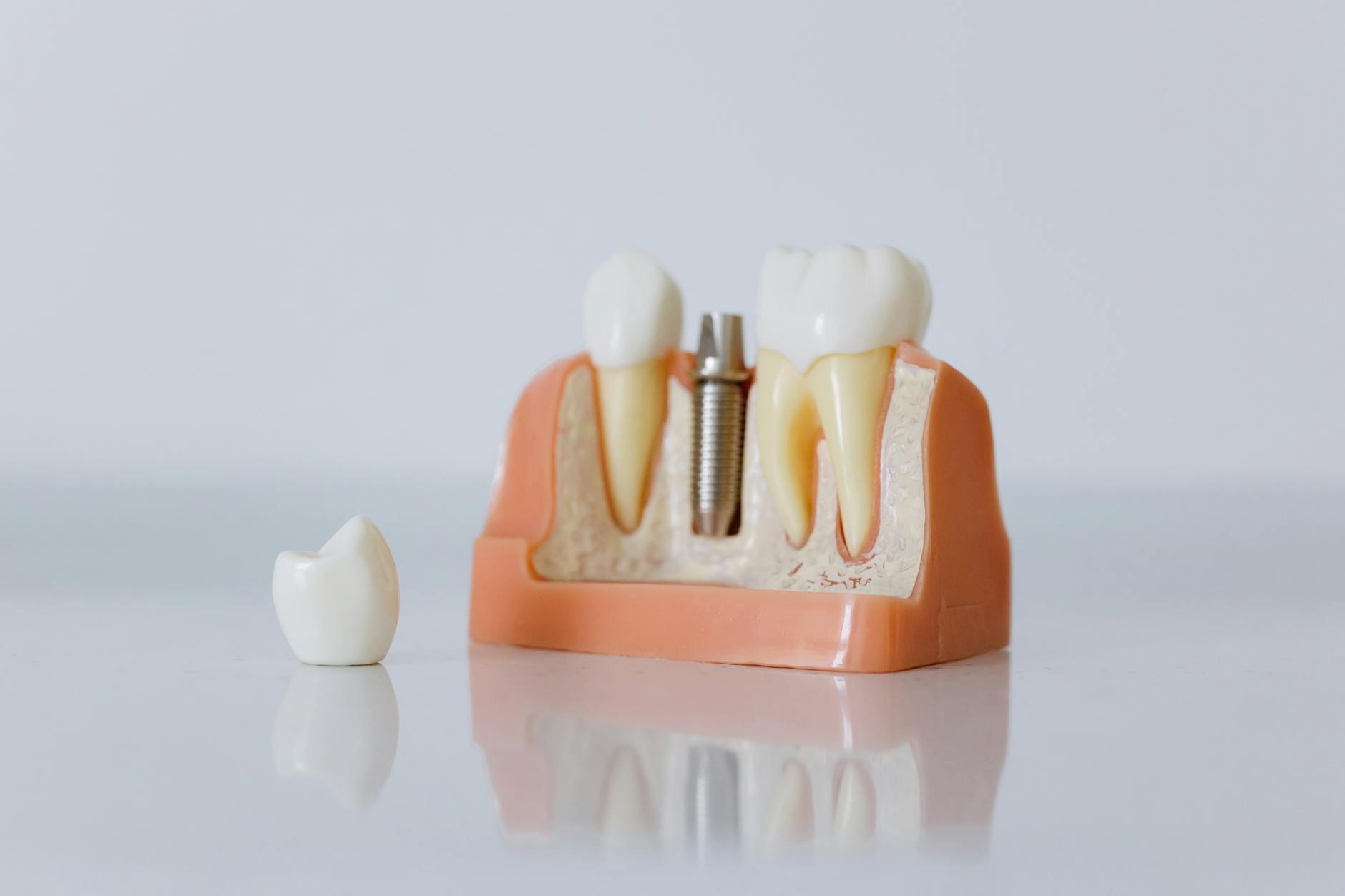
Guided Implant Surgery vs. Traditional Implants: How 3D Planning Changes Your Outcome
By Renov Dental17 min read
Guided implant surgery uses 3D CT scans and computer-designed surgical guides to place implants with sub-millimeter accuracy, while traditional implants rely on the surgeon's freehand skill and 2D X-rays. Guided surgery typically means less tissue disruption, faster healing, and more predictable outcomes, making it the preferred choice for most patients seeking dental implants today.
What Guided Implant Surgery Is and How It Differs from Traditional Placement
Guided implant surgery begins long before the patient sits in the chair. A cone beam CT scan (CBCT imaging) captures a full three-dimensional map of the patient's jaw, including bone density, nerve canals, sinus cavities, and existing tooth roots. That data feeds into specialized planning software where the dentist virtually positions each implant before any incision is made. The entire procedure is simulated digitally first. Only then is a custom surgical guide fabricated.
Traditional implant placement follows a different path. The surgeon reviews 2D periapical X-rays, applies clinical experience, and makes real-time judgments about angle, depth, and positioning once the patient is already in surgery. Experienced surgeons can achieve strong results this way, and traditional implant placement has decades of clinical history behind it. The gap between the two methods, though, is widest precisely where the stakes are highest: bone depth near a nerve, proximity to the maxillary sinus, or cases requiring multiple implants in a single arch.
The Role of 3D Cone Beam CT Scanning in Guided Surgery
CBCT scans give the treatment team a complete picture that 2D X-rays simply cannot provide. The dentist can measure exact bone width and height at each proposed implant site, identify the inferior alveolar nerve pathway, and confirm there is adequate bone volume before committing to a plan. This pre-surgical clarity directly reduces the risk of nerve damage and sinus perforation, which are the two most serious complications in implant surgery.
Once the scan is imported into planning software such as Nobel Clinician, Simplant, or coDiagnostiX, the implant position is placed virtually. The patient can review this plan alongside their dentist before a single incision is made. That level of transparency is absent from the traditional approach entirely.
How a Surgical Guide Is Made and Used
After the virtual plan is finalized, the surgical guide is 3D-printed or milled and delivered to the practice. On surgery day, the guide snaps over the teeth or gums and physically limits the drill's movement to the pre-planned trajectory. Fully guided systems control both angle and depth. Partially guided systems control angle only, leaving depth to the surgeon's judgment.
The guide is the critical link between digital planning and physical execution. Without it, even the most detailed CBCT-based plan remains advisory rather than enforceable.
Feature-by-Feature Comparison: Guided Implant Surgery vs. Traditional Implants
A direct comparison across clinical and patient-experience factors shows where each method wins and where trade-offs exist.
Comparison Table: Guided vs. Traditional Implant Surgery
| Feature | Guided Implant Surgery | Traditional Implant Surgery |
|---|---|---|
| Pre-surgical planning | 3D digital simulation; full anatomy mapped | 2D X-rays; surgeon's clinical judgment |
| Placement accuracy | Sub-millimeter precision via surgical guide | Dependent on surgeon experience |
| Incision required? | Often flapless (no or minimal incision) | Usually requires cutting and lifting gum tissue |
| Procedure time (chair) | Often shorter once guide is ready | Variable; can be longer due to real-time adjustments |
| Healing and recovery | Faster; less tissue trauma | Longer; more post-op swelling typical |
| Risk of nerve/sinus damage | Significantly reduced via pre-planned avoidance | Higher, relies on surgeon skill and real-time judgment |
| Predictability | High; outcome previewed digitally before surgery | Moderate to high depending on clinician experience |
| Same-day tooth option | Frequently compatible | Possible but harder to coordinate |
| Cost | Slightly higher due to technology and guide fabrication | Generally lower upfront |
| Best for | Most patients; especially complex anatomy cases | Experienced surgeons with straightforward anatomy |
Precision and Accuracy: The Clinical Data
Precision is where guided surgery creates its clearest advantage. Studies published in peer-reviewed journals report that guided implant placement deviates an average of 0.5 to 1.5mm from the planned position (ncbi.nlm.nih.gov), while freehand placement commonly shows deviations of 2 to 4mm. In the jaw, even a 1 to 2mm error can compromise crown fit, bite alignment, and the long-term health of surrounding bone.
These are not marketing claims. They are measurable, reproducible differences with direct consequences for your final restoration.
Minimally Invasive Surgery: What Flapless Placement Actually Means
One of guided surgery's most underappreciated advantages is its frequent compatibility with flapless implant surgery. In a flapless procedure, no incision is made to lift and fold back the gum tissue. Instead, the surgical guide directs the drill through a small punch in the gum, reaching the bone without disturbing the surrounding soft tissue.
This is not possible without precise pre-surgical mapping. Without knowing exactly where bone, nerves, and blood vessels are located, a surgeon cannot safely skip the flap. Guided surgery enables this approach because the CBCT data removes the uncertainty that would otherwise require direct visualization.
The clinical result is real. Less tissue trauma means less swelling, less bleeding, and significantly faster recovery. Many flapless guided cases require no sutures at all.
Traditional Surgery and the Flap Requirement
Traditional implant surgery almost always requires a flap procedure. The surgeon cuts along the gumline, lifts the tissue back, and exposes the underlying bone to visualize the surgical site directly. This access is necessary precisely because the surgeon does not have the pre-confirmed 3D roadmap that guides the guided approach.
Adequate visualization is a legitimate clinical need, and experienced surgeons manage it skillfully. The trade-off is real: more tissue disruption, longer healing time, more post-operative discomfort, and sutures that must dissolve or be removed. Recovery after a traditional flap procedure typically runs 5 to 10 days, compared to 1 to 3 days for many flapless guided cases.
Surgical Time: Speed as a Clinical Outcome
Emergent research on guided surgery systems suggests that well-planned guided procedures can meaningfully reduce chair time on surgery day (ncbi.nlm.nih.gov). The logic is straightforward: when the surgeon does not need to stop and reassess angle, measure depth visually, or reposition in real time, the surgical sequence moves faster.
It is worth being precise here. The planning phase takes longer with guided surgery, typically one to two weeks between scan and procedure day. Total treatment timeline may be similar. The benefit is not necessarily a shorter overall process; it is a shorter, more controlled surgical appointment with fewer real-time decisions under pressure.
Success Rates: What the Numbers Actually Show
This headline statistic is frequently cited on dental practice websites, but the breakdown matters more than the average.
Success rates are not uniform across all patients or all surgeons. Bone density plays a critical role: patients with low bone density (Type IV bone) show higher failure rates regardless of surgical method, though guided placement in compromised bone reduces the risk of positional errors that accelerate failure. Smokers, patients with uncontrolled diabetes, and patients with insufficient bone volume who skip bone grafting show lower success rates across both methods.
The honest conclusion is this: guided surgery does not guarantee success, and traditional surgery does not preclude it. What guided surgery does is reduce the human variables that can turn a borderline case into a failed one.
Outcomes Depend on More Than the Surgical Method
Clinical outcomes are shaped by planning quality, clinician expertise, patient bone quality, and aftercare. A perfectly guided case placed in compromised bone without proper aftercare will fail. A freehand case performed by a highly trained oral surgeon on a healthy patient with excellent bone may succeed for decades.
The surgical guide eliminates one major variable: positional error. It does not eliminate the others. Patients should understand that guided surgery is a risk-reduction tool, not a guarantee, and that long-term success depends heavily on their own bone health and post-surgical compliance.
Pros and Cons: Guided Implant Surgery vs. Traditional Implants
Guided Implant Surgery: Pros and Cons
Pros:
- Sub-millimeter precision reduces placement errors
- Flapless option means faster, less painful recovery
- Pre-surgical 3D plan reviewed before any cutting begins
- Shorter chair time on surgery day once the guide is ready
- Greater predictability for complex bone anatomy
- Easier to combine with same-day temporary teeth
- Patient can see and understand the digital plan before committing
Cons:
- Slightly higher upfront cost due to CBCT scan and guide fabrication
- Requires additional planning time before surgery day
- Not all practices offer the technology
- Rarely, unexpected anatomy during surgery may require deviation from the guide
Traditional Implant Surgery: Pros and Cons
Pros:
- Lower upfront cost in many cases
- Highly experienced surgeons can achieve excellent results
- Greater intraoperative flexibility if anatomy surprises arise
- Widely available at most implant-placing practices
Cons:
- Higher reliance on individual surgeon skill
- Greater variation in outcomes between providers
- Typically requires a flap procedure, which means more recovery time
- Less patient transparency, harder to show or explain the plan upfront
- Higher statistical risk of nerve or sinus complications
- Less compatible with immediate loading and same-day teeth
Who Is the Right Candidate for Each Approach?
This question receives shallow treatment almost everywhere online. The real answer requires thinking through specific anatomy thresholds and case complexity, not just generic descriptions.
Guided surgery offers the clearest advantage in five specific scenarios. First, patients with limited bone height near the inferior alveolar nerve in the lower jaw, where even 1mm of positional error risks permanent nerve damage. Second, patients receiving multiple implants in a single arch, where cumulative positioning errors from freehand placement compound across each site. Third, patients pursuing same-day dental implants with immediate temporaries, where the restoration must be fabricated in advance and the implant position must match the pre-planned angulation precisely. Fourth, patients managing dental anxiety who benefit from seeing the digital plan and knowing exactly what will happen before the procedure begins. For example, consider a 48-year-old parent from Ontario who has avoided dental care for years due to past negative experiences and anxiety about implant surgery. With guided implant planning, they can view their 3D scan and see exactly where the implant will be placed, understand the flapless approach that means minimal cutting, and know recovery will take just a few days instead of weeks. This transparency and predictability transforms their confidence from dread to readiness. Fifth, patients who want the fastest possible recovery with minimal disruption to work and daily life.
Cases Where Guided Surgery Is Especially Recommended
Consider this concrete example. A 54-year-old patient in Claremont needs three implants in the upper jaw, where the sinus floor is lower than average due to natural bone resorption after years without teeth. In a traditional freehand approach, the surgeon must estimate depth in real time to avoid sinus perforation. A CBCT scan would show exactly how much bone exists between the proposed implant sites and the sinus floor, and the surgical guide would physically prevent the drill from exceeding safe depth. The risk profile changes entirely.
When Traditional Implant Placement May Be Preferred
Traditional surgery is not an inferior method in every context. For a single posterior tooth replacement in a healthy patient with abundant bone volume, a highly experienced surgeon using 2D X-rays and freehand technique may achieve an excellent result with no meaningful disadvantage. In cases where anatomy changes significantly during surgery, unexpected dense cortical bone, a curved ridge, or a need to adjust angulation based on real-time tactile feedback, the guided approach can actually limit the surgeon's flexibility.
Some oral surgeons with extensive experience prefer freehand placement for straightforward cases precisely because the guide introduces its own constraints. The key word is "straightforward." As case complexity rises, that flexibility advantage disappears and the precision advantage of guided surgery takes over.
What to Ask Your Dentist Before Choosing an Approach
Before committing to either method, ask your provider these direct questions:
- Do you have an in-office CBCT scanner, or will I need to go elsewhere?
- Will you show me my 3D scan and walk me through the virtual plan before surgery?
- Is flapless surgery an option for my anatomy?
- What happens if the guide needs to be adjusted during surgery?
- How many guided implant cases have you placed?
The answers reveal more than the technology question itself. A provider who cannot walk you through a digital plan before surgery may not be doing the depth of pre-surgical planning that changes outcomes.
Verdict: Which Should You Choose?
For most patients considering dental implants today, guided implant surgery is the clinically superior choice when offered by a well-trained, technology-equipped provider. The precision, safety, faster recovery, and patient transparency advantages are not marginal. They are clinically meaningful and well-supported by the literature.
The modest cost difference is offset by reduced risk of complications, revision procedures, and lost workdays during recovery. A failed implant that requires removal and replacement costs far more than the premium for guided surgery at the outset.
The decision framework is straightforward. Choose guided surgery if: you have complex anatomy, limited bone height near critical structures, multiple implants planned, interest in same-day restorations, or significant dental anxiety. Consider traditional surgery only if: you have simple single-tooth replacement needs, your surgeon has extensive documented experience with freehand placement, and the anatomy is unambiguously favorable.
Traditional implants remain a valid option in the right hands for the right cases. But "the right case" is narrower than most traditional-leaning providers acknowledge.
The Bottom Line for Claremont and Inland Empire Patients
At Renov Dental, we perform guided implant surgery in-house with on-site CBCT imaging and digital planning. Our patients never need a referral to a specialist or a separate imaging center. Every implant case begins with a full 3D plan that the patient reviews alongside our team before any procedure is scheduled.
Access to this level of care no longer requires a trip to a large urban center or a specialty oral surgery clinic. Patients in the Claremont and Inland Empire area should look for a provider who owns a CBCT scanner, performs guided surgery regularly, and can walk you through your digital plan before you commit. Combining guided implant surgery with same-day capabilities means fewer appointments, faster results, and a more comfortable experience from start to finish. That combination is available here.
Frequently Asked Questions
Is guided implant surgery more expensive than traditional implants?
Guided implant surgery typically costs somewhat more than traditional placement due to the CBCT scan and custom surgical guide fabrication. However, the higher upfront cost is often offset by reduced risk of complications, fewer revision procedures, and faster recovery with less time away from work. Most patients find the value proposition straightforward when reviewing long-term outcomes.
How long does guided implant surgery take compared to traditional implant placement?
The surgery day appointment for guided implant placement is often shorter because the surgeon follows a pre-confirmed plan rather than making real-time decisions. However, the planning phase adds one to two weeks before surgery. Total treatment timeline is similar. The key benefit is a faster, more controlled surgical appointment with fewer variables on procedure day.
Is guided implant surgery painful, and is recovery really faster?
Guided surgery frequently allows flapless placement, meaning no cutting or suturing of gum tissue. This dramatically reduces post-operative swelling, bleeding, and discomfort. Many guided flapless cases involve just one to three days of recovery, compared to five to ten days typical after traditional flap surgery. Less tissue trauma means less pain and fewer prescription painkillers needed afterward.
Can any dentist perform guided implant surgery, or do I need a specialist?
Guided implant surgery requires specific training and in-office CBCT imaging technology, but it is not restricted to oral surgeons or periodontists. General dentists with advanced implant training and the right equipment can perform it competently. The most important factors are regular hands-on experience with guided cases, access to an in-office scanner, and familiarity with the planning software used.
What is a surgical guide for dental implants, and how is it made?
A surgical guide is a custom-fabricated device, typically 3D-printed or milled from scan data, that fits over the patient's teeth or gums during surgery. It physically directs the drill to the pre-planned angle and depth, preventing deviation from the virtual treatment plan. Fully guided systems control both angle and depth. The guide is produced after the digital plan is finalized and patient-approved.
Does guided implant surgery work for patients who need bone grafting first?
Yes. Patients requiring bone grafting before implant placement can still benefit from guided surgery once grafting is complete and adequate bone volume is confirmed. CBCT imaging is especially valuable in these cases because it measures the precise dimensions of grafted bone before the implant procedure, confirming readiness and allowing accurate planning around regenerated bone architecture.
How does guided implant surgery reduce the risk of implant misalignment?
Guided surgery reduces misalignment by replacing real-time freehand judgment with a pre-confirmed, physically enforced drill path. The surgical guide limits the drill's movement to the exact angle, depth, and position determined during digital planning. This eliminates the cumulative positioning errors common in freehand placement, where even a skilled surgeon compensates manually for bone contour and visibility limitations in real time.
What are the main benefits of using CBCT scans in dental implant placement?
CBCT scans provide a complete 3D map of bone density, nerve location, sinus boundaries, and existing tooth roots before any surgery begins. This allows the dentist to measure exact bone dimensions, avoid critical anatomical structures, and confirm adequate bone volume at each site. The result is a treatment plan grounded in verified anatomy rather than estimated from 2D projections, reducing the risk of nerve damage or sinus perforation.
How does biometric dentistry planning improve the long-term success of implants?
Biometric planning uses the patient's actual anatomical measurements, bone density data, and occlusal forces to position implants in alignment with natural function. When implants are placed at angles and depths optimized for the individual's bite load and bone structure, they integrate more effectively and experience less mechanical stress over time. This reduces late-stage complications like peri-implantitis, crown fracture, and bone loss around the implant collar.
Are there any specific cases where traditional implant placement is preferred over guided surgery?
Traditional placement may be preferred for single-tooth replacements in patients with abundant, well-defined bone and no proximity to nerves or sinuses, especially when performed by a highly experienced surgeon. Cases requiring significant real-time adaptation due to unexpected anatomy may also benefit from the flexibility freehand surgery allows. Traditional methods are also more accessible in practices that lack in-office CBCT equipment.
How does the accuracy of guided implant surgery compare to non-guided methods?
Peer-reviewed studies report guided implant placement deviates an average of 0.5 to 1.5mm from the planned position. Freehand placement commonly shows deviations of 2 to 4mm under similar conditions. In jaw anatomy, that difference is clinically significant. Even a 2mm positional error can affect crown fit, bite alignment, and the long-term stability of bone around the implant.
Sources & References
About the Author
Renov Dental
Renov Dental Group is Claremont's comprehensive dental practice offering advanced technology, guided implant surgery, and same-day dentistry with personalized, anxiety-free care.
Related Posts
Dental Anxiety Is Real: 10 Evidence-Based Ways Comfort-Focused Practices Help You Through It
Dental anxiety is one of the most common reasons people avoid the dentist — and one of the most treatable. This guide breaks down 10 evidence-based techniques that modern, comfort-focused practices use to help anxious patients feel safe, in control, and genuinely cared for from the moment they walk in the door.
16 min read
Same-Day Crowns Explained: How One-Visit Restorations Save You Time Without Cutting Corners
Same-day dental crowns use in-office digital scanning and milling technology to design, fabricate, and place a permanent crown in a single appointment — no temporaries, no second visit, no waiting weeks. Here's exactly how the process works, what to expect, and whether same-day crowns are right for you.
15 min read
Why Getting All Your Dental Care Under One Roof Matters More Than You Think
Most patients don't realize how much fragmented dental care costs them — in time, money, and treatment quality. This guide breaks down the real benefits of comprehensive dental care under one roof and what to look for in a practice that can truly handle everything.
15 min read